
Solved As sales manager, Joe Batista was given the following static .. 1 Answer
Litecoin Лайткоин LTC Цена, Графики, Рыночная капитализация
January 11, 2023Solved As sales manager, Joe Batista was given the following static .. 1 Answer

Make any necessary adjustments based on the feedback received and secure final approval to implement the budget. As such, this limitation often leads to budget overruns, which forces organizations to find an alternative funding source or cut costs in other areas. Static budgets help avoid unnecessary expenditures and foster accountability within departments that are given a clear understanding of their financial boundaries. What’s important here is the stability of the static budget, which improves clarity and reduces confusion in financial evaluations.
Disadvantages of static budgets
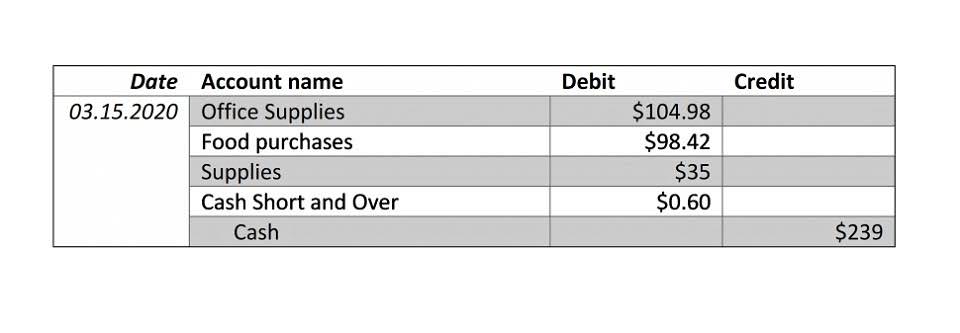
A negative variance Cash Disbursement Journal indicates that actual results are worse than budgeted results. In other words, it’s the deviation between the planned/forecasted and actual figures. Once the quarter progresses, they will compare actuals to the budget to see how they perform. Uncover the habits, tools, and approaches that set high-impact FP&A teams apart—straight from 7 experts. For businesses unsure of how to bridge the gap between these approaches, seeking expert guidance can make all the difference.
Identify revenue sources

The budget in zero-based budgeting is created from scratch each period, starting with a “zero base.” Zero-based budgeting is a budgeting method in which all expenses must be justified for each https://homeandgadgets.com/quickbooks-online-login-sign-in-to-access-your/ new period, rather than simply incrementing the previous budget. Furthermore, it can be adjusted as needed to reflect changes in revenue or expenses. It is more responsive to changes in the business environment but can be more complex to create and manage. A positive variance indicates that actual results are better than budgeted results.
Inflexibility in Changing Market Conditions

However, they are inflexible, can lead to misleading conclusions during variance analysis, and don’t account for changes in activity that can occur, especially in unpredictable environments. The discrepancy between the budget and the actual figures is represented as a variance, which can then be analyzed to understand business performance and budgeting accuracy. Say a company prepares a static budget for the upcoming quarter based on an expected production level of 10,000 units. For example, you create a business budget based on the idea of earning $1m in revenue in the coming period. Your budget for various expense categories remains unchanged, whether you make $1m, $1.2m, or $800k. Variable costs are expenses that change in proportion to the level of production or sales.

Global tech companies grew at exponential rates even through a pandemic in 2020. However, late in 2022 and early in 2023, the global recession round the corner, they had started curbing their budget and spent their resources in places only where it was absolutely necessary. Static budgets are a simple and straightforward method for managing business expenditures.

Track budgets automatically and enforce spending limits with Ramp
- In the realm of financial reporting, static budgets have long been a cornerstone of fiscal planning.
- For companies embracing dynamic budgeting or optimizing static methods, Phoenix Strategy Group uses a data-driven approach.
- It can be described as the prediction of income and expenses for the time being, which is not affected by an increase or decrease in sales or production levels.
- By comparing actual spending against set limits, organizations can quickly spot when departments go over budget, helping to curb unnecessary expenses.
- Just as static budgets provide some important benefits, they also come with a number of limitations.
- Instead of relying on outdated projections, management can act on current insights, keeping the organization nimble and ready to seize opportunities as they arise.
- This means that some companies that use static budgets end up struggling to adjust priorities or resources when new challenges or opportunities pop up.
Some businesses use both budget types to allocate funds accurately to departments and specific activities. For example, they may use a flexible budget for marketing purposes and a static budget for company events. Flexible budgets are more accurate than static budgets because it’s almost impossible to predict all of your costs. For example, every business has some fixed costs like rent, but there are several variable costs and new costs that seem to pop up every day. A static budget stays the same regardless of sales or revenue changes within the company. Instead, it uses predicted fixed costs for a given period, such as a month, quarter, or year to determine how much the company can allocate to various projects, business ideas, and activities.
On top of that, dynamic budgeting often depends on sophisticated tools and data analytics to handle real-time updates and frequent revisions. Another challenge is maintaining accurate forecasts in fast-changing markets – frequent updates can sometimes create confusion or lead to inconsistent financial strategies. Some leadership teams prefer the control and predictability of static budgets, while others thrive on the flexibility and quick decision-making that dynamic approaches enable.
- It provides a benchmark against which the actual results can be compared, enabling businesses to evaluate their financial performance and identify any variances that may arise.
- A flexible budget is a great performance evaluation tool when used with a static budget.
- A flexible budget is a budget that is adjusted for the actual level of activity or output that occurs during the budget period.
- In other words, you can take a favorable variance in one category of your budget, and apply it to another flexible budget variance in hopes of producing more profit.
- For example, lumber prices rise dramatically in the spring because more companies are building homes.
- The static budget should also be adjusted and updated to account for the new information and events that may affect the business.
A flexible budget will allow you to adjust your financial plan in line with the twist and turns of the business environment. You will also be able to incorporate new innovative ideas to get ahead of your competition. Because flexible budget changes according to your needs, it may be the wiser choice for you. It cannot be adjusted despite company activity level changes or external circumstances. It is a significant setback to a company’s financial plan since it may be impossible to make accurate forecasts. A static budget makes a static budget report it easy for companies to track their cash flow – all outgoing payments and incoming revenues will be monitored and kept within the limit of the company’s budget.
